Process Safety & Asset Integrity Management System Excellence
"Engineering Safer Operations, Sustaining Reliable Assets — From Hazard to Harmony."
Gap Analysis · Physical Barrier Screening · System Development · Technical Studies · Implementation & Audit · Asset Integrity Management System
Every Incident Was Once
Considered Impossible.
From Bhopal to Texas City to Buncefield — history reminds us that process safety is not a cost. It is the foundation of every barrel produced, every megawatt generated, and every life that returns home safely.
What PSM Delivers to Your Organization
Protect Lives
Prevent catastrophic incidents that endanger people, communities, and the environment.
Safeguard Assets
Avoid multi-million-dollar losses from unplanned shutdowns, fires, and explosions.
Earn Trust
Strengthen license to operate with regulators, investors, and the communities you serve.
Operational Excellence
Drive reliability, efficiency, and sustainable performance across every facility.
"Safety is not the absence of incidents — it's the presence of barriers, discipline, and leadership."
Clients & Success Stories
Trusted by Leading Energy Companies



The PSM Solution Roadmap
EPROM delivers Process Safety Management as a structured, end-to-end journey — not a one-off study. Our four-phase roadmap takes your operations from hidden risk exposure to a sustainable, audit-ready PSM system aligned with CCPS RBPS, API, ASME and ISO standards.
Phase 01 · Foundation
Gap Analysis & Physical Barrier Screening — diagnose where you stand.
Phase 02 · System Development
Design and document the PSM management system, element by element.
Phase 03 · Technical Studies
PHA, HAZOP, LOPA, SIL, QRA and other risk & integrity studies.
Phase 04 · Implementation
Deploy procedures, tools, training and audits in the field.
Phase 05 · Sustainability
KPIs, continuous improvement and assurance to keep the system alive.
Gap Analysis & Physical Barrier Screening
EPROM performs independent and unbiased PSM Gap Analysis and Physical Barrier Screening to expose hidden risks, performance gaps, integrity weaknesses, and deficiencies — the essential starting point of every successful Process Safety & Asset Integrity journey.
Gap Analysis
Independent benchmarking of current Process Safety & Asset Integrity practices against CCPS RBPS, API, ASME and ISO standards — identifying shortfalls, prioritizing risks and defining a clear improvement roadmap.
- Maturity scoring per element
- Prioritized action plan
- Close-out report & tracker
Physical Barrier Screening
Systematic screening of safety-critical equipment and barriers against major accident hazards — verifying availability, integrity and performance standards of every layer of protection.
- SCE identification & register
- Barrier health verification
- Bow-tie & LOPA alignment
Methodology
Document Review
Comprehensive review of procedures, policies, inspection records, and compliance documentation.
Employee Interviews
Structured interviews with operators, engineers, and management to capture knowledge gaps and process insights.
Site Visits & Field Observations
On-site walkthroughs and field inspections to assess physical conditions and operational practices.
Key Deliverables
Our Proprietary Risk Lens Software
A purpose-built digital platform that powers every EPROM Gap Analysis & Physical Barrier engagement — turning thousands of data points into prioritized, board-ready insights in real time.
EPROM Risk Lens™ is an in-house platform operated exclusively by EPROM consultants across multiple client engagements — not a client-facing tool. Clients receive the structured outputs, reports and dashboards it generates.
Building the Operational Excellence System
Following the Gap Analysis & Physical Barrier Screening, EPROM develops a fit-for-purpose management system aligned with the CCPS Risk-Based Process Safety (RBPS) framework — turning identified gaps into structured, sustainable solutions across all 20 PSM elements.
Process Safety Management — 20 Elements
Structured across four foundational pillars: Commit to Process Safety · Understand Hazards & Risk · Manage Risk · Learn from Experience.
Process Safety Culture
Leadership commitment, policies and behaviors that make safety the way we operate.
Compliance with Standards
Identifying and adhering to applicable codes, standards and regulatory requirements.
Process Safety Competency
Building and sustaining the right knowledge, skills and succession across the workforce.
Workforce Involvement
Engaging operators and technicians in PSM decisions, hazard reviews and improvements.
Stakeholder Outreach
Transparent dialogue with regulators, communities and partners on process safety performance.
Process Knowledge Management
Capturing, controlling and retaining PFDs, P&IDs, MSDS, chemicals data and design basis.
Hazard Identification & Risk Analysis
HAZID, HAZOP, LOPA, QRA, FERA, Bowtie and Safety Case to identify and manage MAHs.
Operating Procedures
Structured SOPs (startup, shutdown, normal, ESD, temporary) for every unit and utility.
Safe Work Practices
PTW, isolations, confined space, working at height, SIMOPS, MOPO and related controls.
Contractor Management
Selecting, orienting and overseeing contractors to meet PSM expectations on site.
Training & Performance Assurance
Training matrices, task analysis and verification that personnel can perform safely.
Management of Change
Controlled review and approval of technical, organizational and procedural changes.
Operational Readiness (PSSR)
Pre-Startup Safety Reviews to confirm facilities are safe to commission and operate.
Conduct of Operations
Shift handover, labeling, communication, housekeeping and disciplined field execution.
Emergency Management
ERP, accident scenarios, mock drills and tabletop exercises for credible MAH events.
Incident Investigation
Root cause analysis of incidents and near-misses to prevent recurrence.
Measurement & Metrics
Leading and lagging KPIs to monitor PSM health and drive accountability.
Auditing
Independent verification that PSM elements are designed and functioning as intended.
Management Review & Continuous Improvement
Periodic leadership review closing the loop on performance, learning and improvement.
NoteThe detailed deliverables under each Element of the System Development phase shall be defined and finalized based on the outcomes of the Gap Analysis and the resulting Action Plan.
Hazard & Risk Engineering Studies
EPROM facilitates interactive, multi-discipline study sessions — HAZID, HAZOP, LOPA and Bow-Tie — to systematically identify hazards, evaluate residual risk, define independent protection layers, and link Safety Critical Elements to barrier performance.
Identify all credible hazards (process, occupational, environmental, natural) at the earliest possible project stage to feed conceptual design and risk register.
Interactive Study Sessions
- Multi-discipline workshop facilitation (operations, process, mechanical, HSE)
- Guideword-driven brainstorming on each node / area
- Live recording in HAZID worksheet with risk ranking
- Real-time consequence/likelihood scoring against client risk matrix
Deliverable
HAZID Study Report
Full register of identified hazards, causes, consequences, existing safeguards, recommendations and action owners with target dates.
From System on Paper to Lived Reality
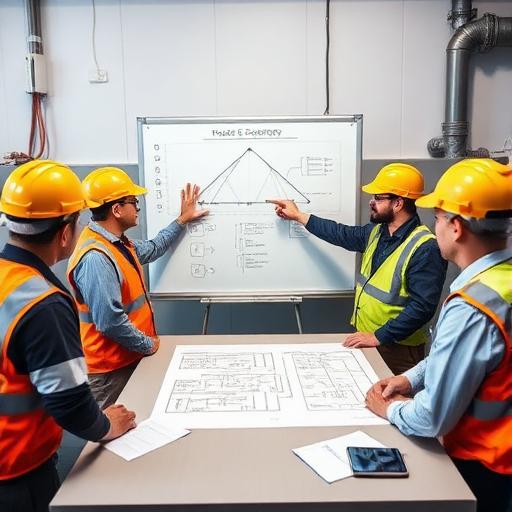
EPROM closes the journey by deploying the developed Process Safety & Asset Integrity systems in the field, building workforce competency through targeted training, and independently verifying performance through audits — the foundation for sustainable operational excellence.
System Roll-Out & Field Deployment
Translating the developed PSM & AIM systems into day-to-day operations through structured implementation plans, change leadership and on-site coaching.
- Implementation strategy & phased roll-out plan
- Procedures, forms and workflow deployment
- Change management & leadership engagement
- On-site mentoring of operations & maintenance teams
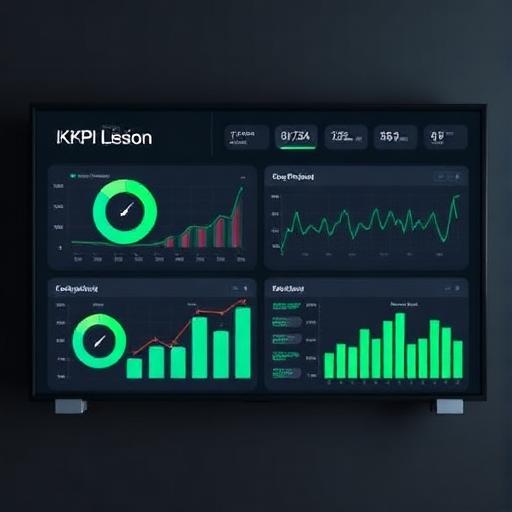
- KPI dashboards and performance tracking
Competency Development Program
Building lasting capability through tailored training paths for leadership, engineers, operators and contractors — classroom, e-learning and field-based.
- Training Needs Analysis (TNA) & competency matrix
- PSM awareness & 20-element deep-dive workshops
- HAZOP / LOPA / Bow-Tie facilitator training
- RBI, RCM & IOW practitioner courses
- Train-the-trainer & certification of internal champions
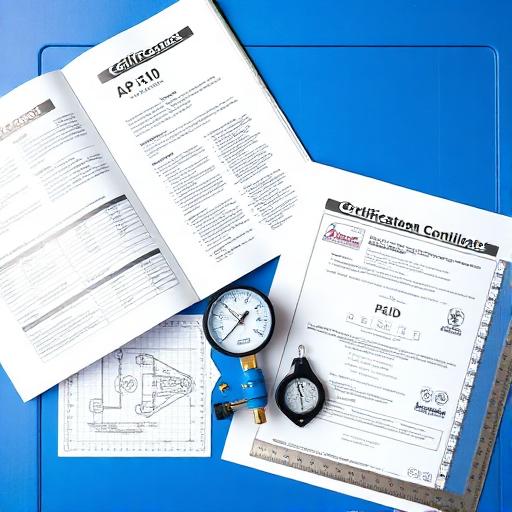
Independent Audit & Verification
Independent verification that PSM and AIM elements are designed, implemented and functioning as intended — closing the loop on continuous improvement.
- PSM compliance audit against CCPS RBPS
- Asset Integrity & inspection program audit
- Barrier & SCE performance verification
- Audit findings register with corrective actions
- Management review & continuous improvement plan
Sustainable Outcomes


Implementation, Audit & Sustainability
End-to-end support from implementation through sustainable operations and continuous improvement.
Procedure Implementation
Deploying developed systems and procedures across operations.
Training Programs
Competency-based training for operations and maintenance teams.
Audit Programs
Systematic auditing to ensure compliance and effectiveness.
Compliance Verification
Independent verification against standards and requirements.
KPI Monitoring
Tracking leading and lagging indicators for asset performance.
Dashboarding
Real-time visibility into integrity status and metrics.
Continuous Improvement
Sustainability through ongoing optimization cycles.
Governance & Reporting
Executive reporting and governance frameworks.
Asset Integrity Management
The Asset Integrity Excellence Journey
Transforming Risk into Reliability
A structured, phased approach to building world-class asset integrity from assessment through sustainable operations.
System Development & Technical Studies
Comprehensive development of procedures, systems, and technical studies across every discipline of asset integrity management.
System Development
All deliverable categories for asset integrity system development.
Technical Studies
Risk-Based Inspection (RBI) and Reliability Centered Maintenance (RCM) studies.
Note: The detailed deliverables under each category of the System Development phase shall be defined and finalized based on the outcomes of the Gap Analysis and the resulting Action Plan.
Risk Based Inspection RBI
From Corrosion Understanding to Optimized Inspection Planning
Corrosion Study Deliverables
- Corrosion Circuit Marked-Up PFDs▶ click to view
- Corrosion Circuit Tables▶ click to view
- Corrosion Study Sheets▶ click to view
- Marked-Up P&IDs▶ click to view
- Injection & Mixing Points▶ click to view
- Soil-to-Air Interfaces▶ click to view
- Dead Legs & Damage Mechanisms▶ click to view
Risk Assessment & Inspection Planning
- Equipment & Piping Risk Ranking▶ click to view
- Inspection Plans & Tasks▶ click to view
- Inspection Intervals▶ click to view
- Risk Distribution Analysis▶ click to view
- PRV Pop Test Due Dates▶ click to view
- Integrity Operating Windows (IOW)▶ click to view
Reliability Centered Maintenance RCM
Transforming Maintenance from Reactive to Reliability-Driven
Compliance
Built Around International Standards
Every EPROM deliverable is aligned with global best practices and regulatory requirements.
Pipeline Integrity Management
- API 1160— Managing System Integrity for Hazardous Liquid Pipelines
- API RP 1173— Pipeline Safety Management Systems
- ASME B31.8S— Integrity Management for Gas Pipelines
- PHMSA— Pipeline Integrity Management Regulations
- NACE SP0502— Pipeline External Corrosion Direct Assessment (ECDA)
- NACE SP0206— Internal Corrosion Direct Assessment (ICDA)
- NACE SP0204— Stress Corrosion Cracking Direct Assessment (SCCDA)
General Asset Integrity & Mechanical Integrity
- CCPS— Risk Based Process Safety Framework
- CCPS 10— Asset Integrity and Reliability
- ISO 55001— Asset Management Systems
- API RP 580— Risk Based Inspection
- API RP 581— Risk Based Inspection Methodology
- API RP 584— Integrity Operating Windows
- API RP 571— Damage Mechanisms Affecting Fixed Equipment
- API 579-1 / ASME FFS-1— Fitness for Service
- API RP 754— Process Safety Performance Indicators
- API RP 75— Safety and Environmental Management Systems
- ASME PCC-1— Pressure Boundary Bolted Flange Joint Assembly
- ASME PCC-2— Repair of Pressure Equipment and Piping
Pressure Equipment & Fixed Equipment Inspection
- API 510— Pressure Vessel Inspection Code
- API 570— Piping Inspection Code
- API 653— Tank Inspection, Repair, Alteration and Reconstruction
- API 576— Inspection of Pressure Relieving Devices
- API 577— Welding Inspection and Metallurgy
- API 578— Material Verification Program for New and Existing Alloy Piping Systems
- ASME Section VIII— Pressure Vessels
- ASME B31.3— Process Piping
Corrosion & Cathodic Protection
- NACE SP0169— Control of External Corrosion on Underground or Submerged Metallic Piping Systems
- NACE MR0175 / ISO 15156— Materials for Use in H₂S Containing Environments
- NACE SP0102— In-Line Inspection of Pipelines
- API RP 583— Corrosion Under Insulation and Fireproofing
- API RP 571— Damage Mechanisms Affecting Fixed Equipment
- AMPP— Corrosion and Coating Standards
Physical Barrier & Barrier Management
- IOGP Report 544— Standardization of Barrier Definitions
- IOGP— Barrier Management Guidance
- COS— Guidance for Verifying Existing Barriers
- CCPS— Bowtie and Barrier Based Risk Management Practices
- IChemE— Guidance for Barrier Management in the Petroleum Industry
Additional Standards
- IEC 61511— Functional Safety for Safety Instrumented Systems
- IEC 61508— Functional Safety of Electrical, Electronic and Programmable Systems
- NFPA 70— National Electrical Code
- NFPA 70E— Electrical Safety in the Workplace
- NFPA 72— Fire Alarm and Signaling Code
- NFPA 850— Fire Protection for Electric Generating Plants and HVDC Converter Stations
- ISO 14224— Reliability and Maintenance Data for Equipment
- ISO 31000— Risk Management Guidelines
- ISO 45001— Occupational Health and Safety Management Systems
Partner with EPROM to Build Safer,
More Reliable & Sustainable Operations
Let our team of asset integrity experts help you achieve operational excellence, regulatory compliance, and long-term reliability.